THE SHOW
Every city in the world has a dish that deserves to be known everywhere. Most of them never make it. Not because the food isn't extraordinary - but because nobody with the right voice has found it yet.
Dinfluencer is a global hunt for the world's next viral food moment. Each week, Jordan “The Stallion” Howlett - 18.9 million followers on Instagram, 18.7 million on TikTok, and one of the most trusted voices in food on the planet - arrives in a new city with three up-and-coming food creators. Their mission is singular: find the one dish in this place that deserves to go global. Then prove you're the person who can make the world care about it.
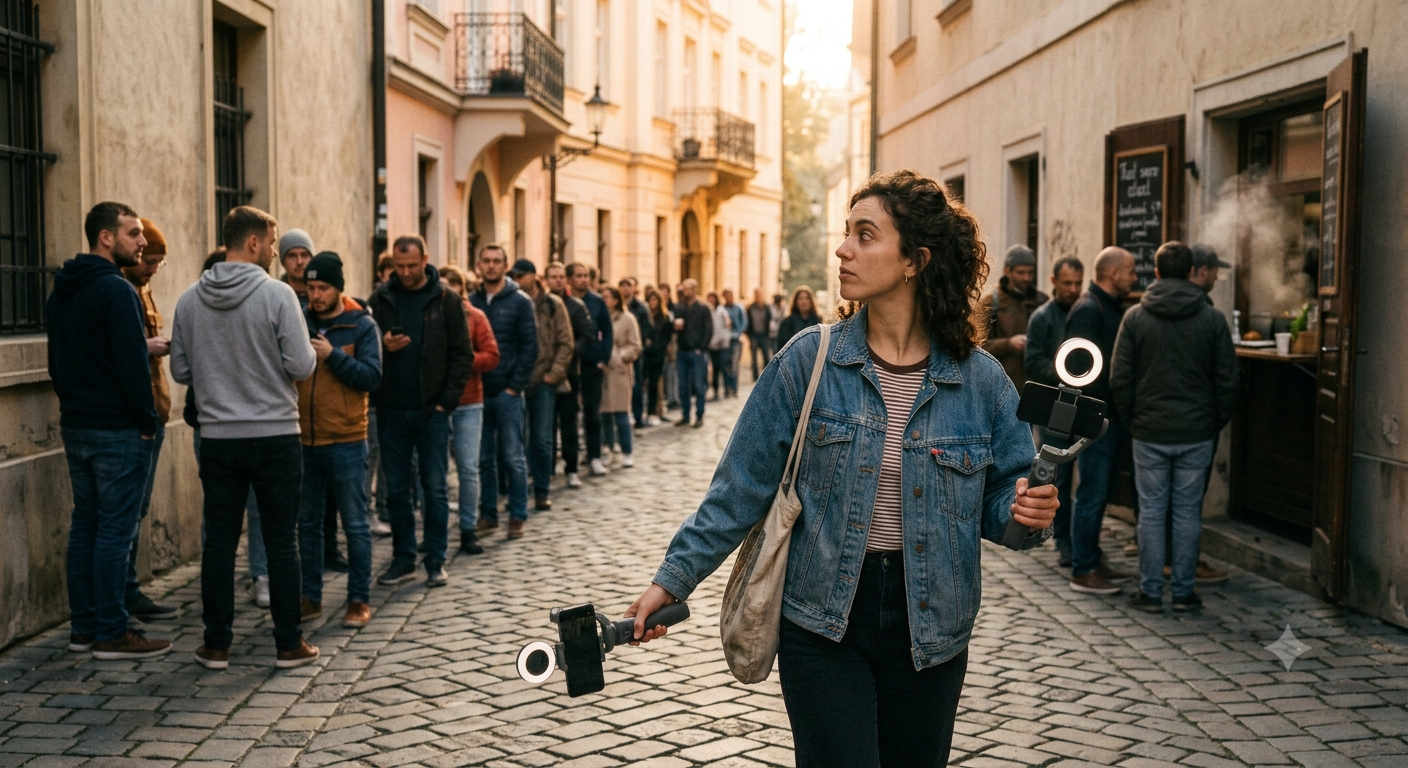
The creators scatter. They explore the markets, the side streets, the spots the tourists never find. They are not looking for a Michelin star or a reservation. The dish they find might come from a grandmother who has been making the same duck soup from a street cart for forty years, or a teenager who figured out a popcorn combination that now has a line around the block every night. What matters is that anyone passing through this city can walk up, wait their turn, and taste something that stops them cold.
When they find it, they get in line. And they start talking to the people around them. How long have you been coming here? What brought you the first time? Why do you keep coming back? Because food doesn't go viral because a chef invented it. It goes viral because people chose it, returned for it, told their friends about it. The creators capture that energy - the hype, the loyalty, the culture around the dish - and they shoot it. Thirty to sixty seconds. No explanation, no pitch. Just the content.
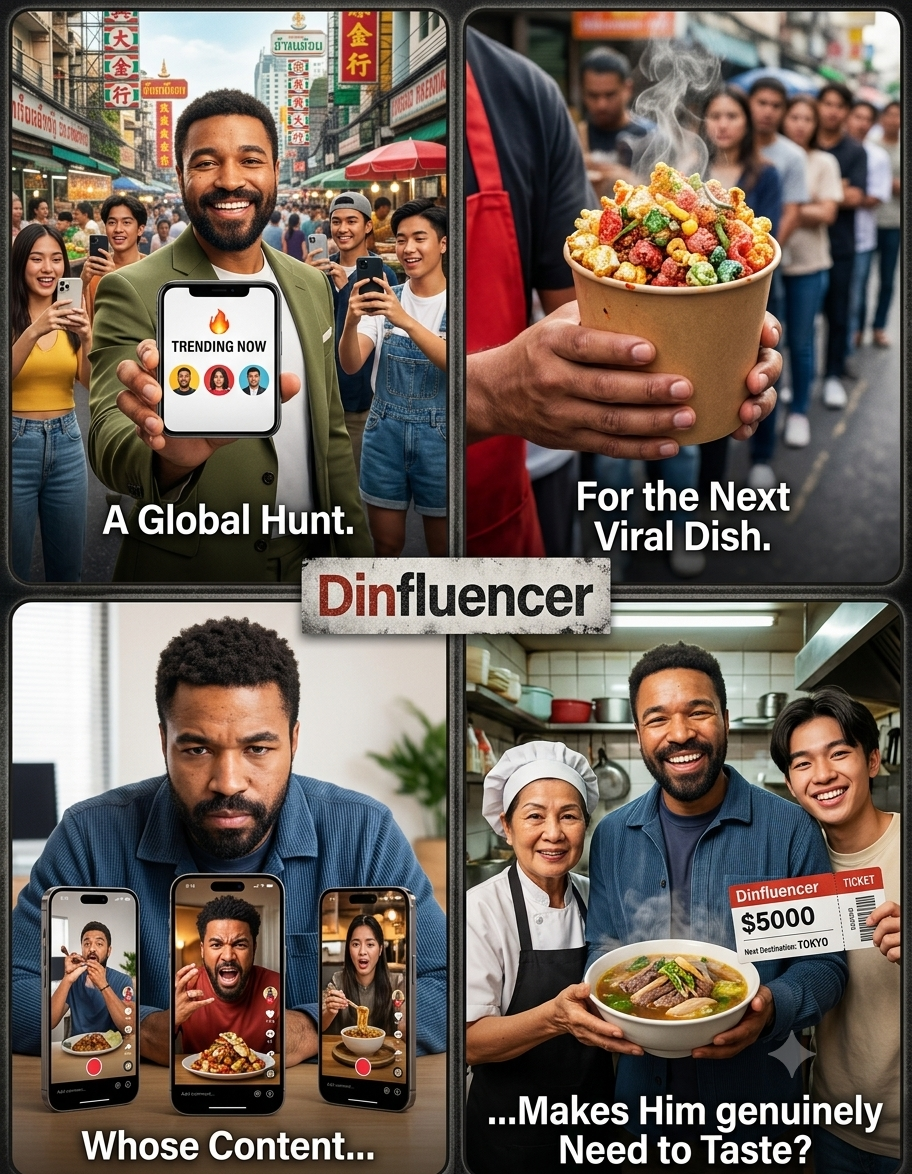
Jordan, meanwhile, is enjoying a rare thing: a city on someone else's clock. After 24 hours, his phone starts going off. One by one, the submissions arrive. He watches each one the way the rest of the world will: on a screen, in the moment, with no context other than what the creator gives him. He gives his honest reaction to each. Roses and thorns. What worked, what didn't, what made him lean in, what left him cold. And then he makes his decision - not based on who pitched it best, but on whose content made him genuinely need to taste that food.
We cut to all three creators, each waiting at the spot they chose. Jordan walks in. He only arrives at one location. The creator whose video stopped his scroll - that's where he goes.
The room holds its breath. Jordan sits down and takes the first bite. No commentary yet. No announcement. Just the moment of truth: does the food actually live up to what the content promised? When it does, everyone in that room knows it before he says a word.
He announces the winner. Five thousand dollars. A ticket to the next destination. And something else: a collab. Jordan tags the creator and the restaurant to his combined 37 million followers as the two of them head into the kitchen with the chef.
This is where the other half of the story lives. Not the hype - the origin. Is it a family recipe passed down for generations? Something invented by accident? A flavor combination nobody saw coming? Jordan and the winning creator cook it together, get their hands dirty, and learn the intention behind the dish. Did the chef ever imagine people would wait an hour for this? The answer is usually the best part.
They sit down and eat what they made. Credits roll over the table.
THE SEASON
The episode winner carries forward to face two brand new challengers in the next city. Win again and you return. Every week you survive, you travel more, create more, and build your platform in real time. For the right creator, this show is a career.
Jordan watches all of it. Every win. Every piece of content. Every choice a creator makes in the field. By the finale, he personally selects his three favorite champions to return for one final showdown - the creators who didn't just win, but who showed him something.
All three champions return - but this time, they each get a ticket to anywhere on the planet. Their choice. Their instincts. Same format, bigger stage. When Jordan's phone chirps with three videos from three different corners of the world, he watches them the same way he always has. Then he gets on a plane.
The finale winner takes $50,000. And then Jordan makes one more announcement: the creator who just won is coming back next season - as his co-host.
CASTING
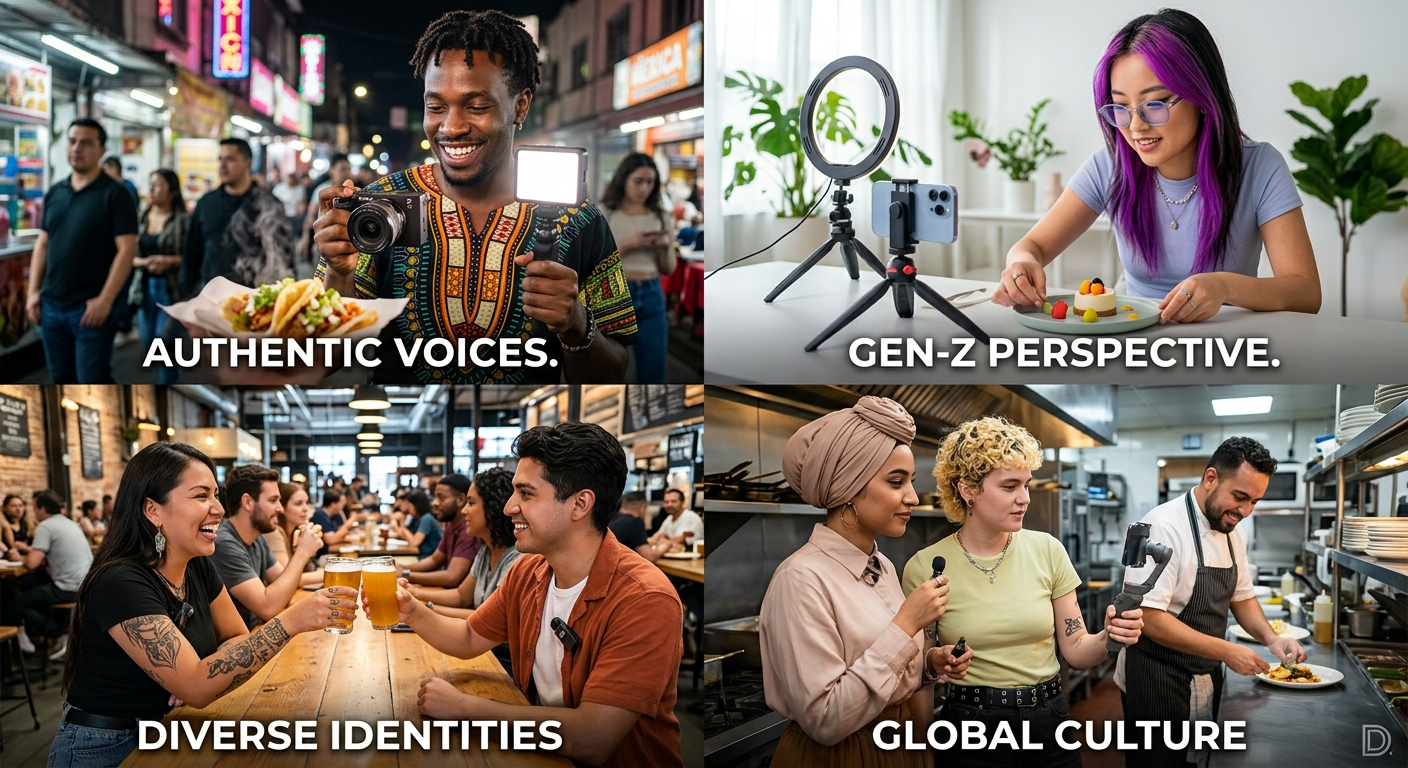
Unlike traditional food and travel formats that skew toward seasoned, expected voices, Dinfluencer features a diverse cast of up-and-coming creators whose backgrounds, perspectives, and identities are as varied as the dishes they discover. Age, gender, ethnicity, sexual identity - the cast reflects the full spectrum of who's actually driving food culture online today. The result is a show that brings in a younger, more digitally native audience without alienating the food and travel viewer who's been watching this genre for years.
GO TO MARKET STRATEGY
Traditional & Branded Distribution
Dinfluencer is built for the current market. The format works as a traditional linear or streaming acquisition, but it is equally designed to function as a premium branded content play for partners who want authentic access to the next generation of food and travel audiences.
The format travels to a new global destination every episode. That is not just a creative choice. It is a structural integration point for the brands that make those journeys possible. Airlines, hotel groups, luggage, credit cards, cameras, and gear are not sponsoring the show. They are the infrastructure the show runs on. Every integration is earned, contextual, and native to the story being told.
By partnering with brands directly, we maintain creative control, own all assets, and place the series across any distribution platform that serves our audience. Brands get authentic integration into a culturally relevant, creator-native format. Audiences get a show that feels like it belongs in the world it's depicting.
Target partners: Travel and hospitality brands, airlines, hotel groups, booking platforms, premium luggage and gear, food and beverage, culinary platforms, and technology brands serving the creator economy.
This model lets us move faster, stay creatively independent, and build something genuinely premium in a landscape where traditional buyers are pulling back and brand investment in content is accelerating.